
Red Light Therapy 101: What It Is, and What It May Help With
Red light therapy has quietly gone from dermatology-office equipment to a bathroom-counter staple, and the gap between what it is actually studied to do and what social media claims it does has grown right along with it. Here is the plain-language version.
What Red Light Actually Is
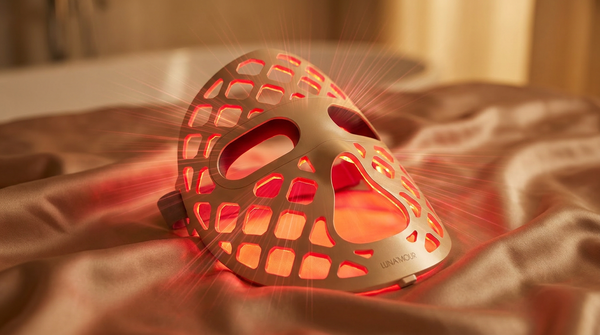
Red light therapy uses light in the 620 to 700 nanometer range: visible, low-heat, and shallow-penetrating compared to infrared. At this wavelength, light is absorbed by mitochondria, the energy-producing structures inside skin cells, in a process researchers call photobiomodulation. The working theory is that more available cellular energy supports the routine maintenance work skin cells already do, such as producing collagen, repairing minor damage, and regulating inflammation.
What It May Help With
Across published research, red light is most consistently associated with support for a smoother-looking texture, a brighter and more even tone, and a calmer complexion with reduced visible redness. Those findings are always framed as "may help" and always tied to consistent use over weeks, not days.
What It Isn't
It isn't a resurfacing laser, an injectable, or a substitute for sunscreen and a real skincare routine. It is a supporting layer, most effective as one habit within a broader routine rather than a replacement for the rest of it.
Where It Fits in a LUNA'MOUR Routine
Our under-eye and face devices pair red light with microcurrent or near-infrared specifically because the wavelengths are designed to complement, not replace, each other. It is a layered approach rather than a single silver bullet. Curious how the other three wavelengths fit in? See The Science of LED Light Therapy.

EyeYouth Revival
Microcurrent and red light therapy, built for the eye area specifically.
Shop EyeYouth Revival →LUNA'MOUR devices are not medical devices and are not intended to diagnose, treat, cure, or prevent any disease. Individual results vary with skin type and consistency of use.