
How Often Should You Use an LED Face Mask? (2026 Guide)
Use your LED face mask as often, and for as long, as your device manual recommends. Start at the lower end of that schedule for the first few weeks, build to a steady rhythm, then move to a lighter maintenance routine once you like what you see. Longer or extra sessions will not speed up results.
In this guide
Key takeaways
- Your device manual sets the rules. Session time and frequency depend on the device's power, wavelengths and design, so there is no single number that fits every mask.
- Think in three phases: a gentle starting phase, a steady building phase, and a lighter maintenance phase.
- More light is not better. Research on light dosing suggests too much can reduce the benefit, so never double up sessions.
- AM or PM both work. Pick the time you will actually keep, and always start on clean skin.
- Skip a session if your skin is broken, sunburned or irritated, and scale back if redness or dryness lingers.
You have your LED mask charged and ready. Now comes the question every new owner asks: how often should I actually use it, and is longer better?
This guide answers the practical side of that question: a simple schedule you can follow, how to fit sessions into a busy morning or a slow evening, and the signs that tell you to ease off. If you want the bigger picture on why steady habits matter more than big efforts, read our Journal piece Why Consistency Beats Intensity. Here, we focus on the calendar: how often, how long, and when to pause.
How often should you use an LED face mask?
The honest answer is: as often as your device manual says. At-home LED devices vary widely in diodes, wavelengths, light output and how close they sit to your skin, so a schedule written for one mask may be too much, or too little, for another. Manufacturers set session time and frequency for their own device, so the manual is the most accurate guide you have.
Research backs up why those settings matter. Scientists who study photobiomodulation, the process behind LED skincare, describe a biphasic dose response: a little light may help, while too much can reduce the benefit rather than add to it 1. The same review notes that many light parameters have to be chosen together, which is exactly why a manual's instructions belong to that device and do not transfer to another one.
For context, light therapy is almost always a series of sessions rather than a one-off. Cleveland Clinic notes that people having red light therapy in a clinic are typically seen one to three times a week for weeks or even months 2. At-home devices are lower powered and are designed for their own routine, which is why your manual, not a clinic schedule, should set your rhythm.
If LED is new to you, our guides The Science of LED Light Therapy and Red Light Therapy 101 explain how the different colors work.
The three-phase LED mask schedule
Most LED routines follow the same arc, whatever the device. You start gently while your skin gets used to it, settle into a regular rhythm while results build, then ease into maintenance. Use this table alongside your manual: the manual gives you the numbers, the table gives you the shape.
| Phase | What it is for | How often | Session length | What to watch |
|---|---|---|---|---|
| 1. Starting | Learning how your skin responds. Usually the first few weeks. | The lower end of your manual's recommended frequency. | The standard session time in your manual. Use a lower intensity if your device offers one. | Any redness or dryness the next day. Comfort around the eyes. |
| 2. Building | A steady habit while results build, over the following weeks to months. | Your manual's full recommended frequency, on a regular schedule. | The standard session time. Never longer. | Progress photos in the same lighting every couple of weeks. |
| 3. Maintenance | Keeping the look you like once you are happy with it. | The lighter maintenance frequency in your manual, or fewer sessions than the building phase. | The standard session time. | If skin starts to look dull, return to the building rhythm. |
Phases are a general framework. Always follow the session time and frequency in your device manual. Individual results vary.
Two habits make each phase easier: tie sessions to something you already do every day, and track progress with photos rather than the mirror, because daily changes are too small to notice. Our upcoming guide, Red Light Therapy Before and After: What to Expect Week by Week, publishes Wednesday, November 4, and goes deeper into what each stage can look like.
How long should each session be?
Use the session time your device is designed for, no more and no less. That length is part of the "dose" your skin receives. Many masks have a built-in timer that switches the lights off when the session ends, so you do not have to watch the clock.
A longer session does not mean faster results. Because of the biphasic dose response described in photobiomodulation research 1, extra light may stop helping past a certain point. Back-to-back sessions count as one long session, so avoid running the timer twice.
Can you use an LED mask every day?
Sometimes, but only if your manual says so. Some at-home masks are designed for daily sessions, while others build rest days into the routine. Each approach was designed around that device's light output.
What does not work is improvising: adding a second session on a "good" day, using two light devices on the same area back to back, or jumping to daily sessions when your manual recommends fewer. Cleveland Clinic notes that red light therapy appears to be safe when used short-term and as directed, that the long-term safety of these devices is not yet known, and that skin or eyes could be damaged if a device is used too often or not according to directions 2. Following the manual is the simplest way to stay inside that safe zone.
Your schedule, device by device
Here is how the three-phase schedule applies to our two LED devices for the face. Both come with a manual that lists session time and frequency, and both run on a timer.
LUNALIGHT
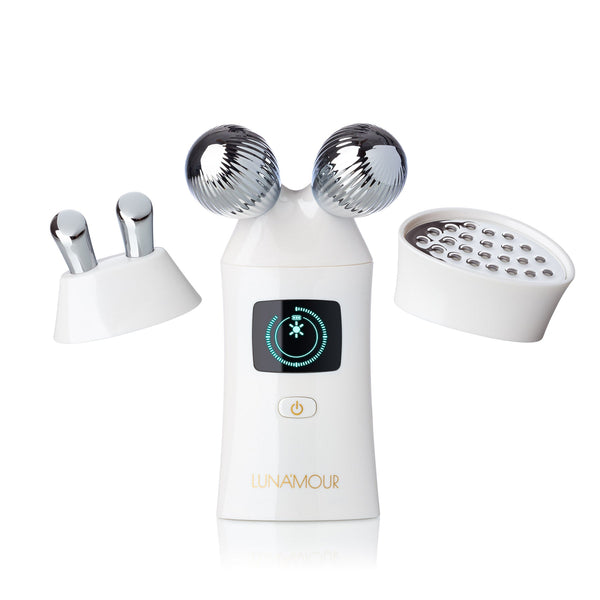
LUNALIGHT is a handheld LED device with interchangeable attachments, four light colors (red, yellow, green and blue) and sonic vibration. It suits people who like to focus on specific areas. Red is the color most associated with the look of fine lines and radiance, yellow and green with a calm, even-looking tone, and blue with clearer-looking skin. Wear the protective goggles supplied with the device and use it on clean, dry skin.
AuraLux Advanced+
AuraLux Advanced+ is a lightweight, hands-free silicone face mask with red light paired with near-infrared, plus yellow and blue settings, adjustable intensity and a choice of session timers. Because it is hands-free, it suits evenings: put it on and relax. Patch test before your first session, as the product guidance recommends, and use it on clean, dry skin.
Lumi LED Amplifier Essence
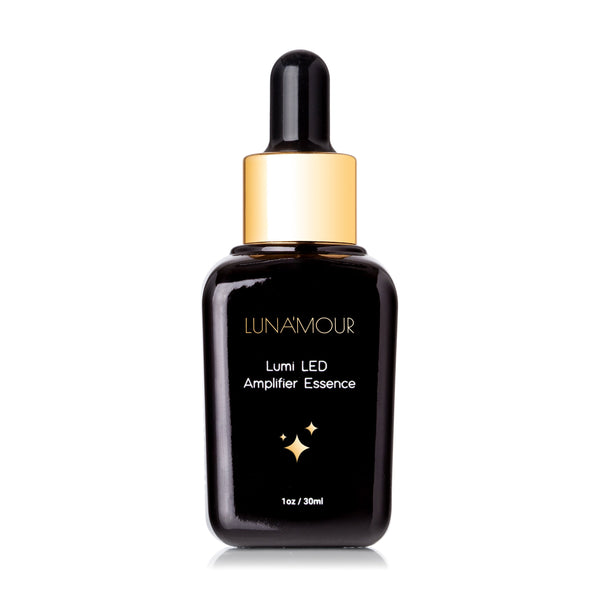
Lumi LED Amplifier Essence is designed as the companion step to light therapy. After cleansing, smooth a thin, even layer over the face, avoiding the eye area, then use your LED device as directed and finish with moisturizer. It forms a light veil that helps keep skin comfortable during a session. Patch test first if your skin is sensitive, and follow the directions on both the essence and your device.
| Device | Format | Starting phase | Building phase | Maintenance | Best fit |
|---|---|---|---|---|---|
| LUNALIGHT | Handheld, four colors, sonic vibration | One color, manual's session time, lower end of the manual's frequency | Manual's full frequency; rotate colors as the manual describes | Favorite color on a lighter schedule | AM routines, targeted areas |
| AuraLux Advanced+ | Hands-free mask, red with near-infrared, yellow, blue | Shortest timer, lower intensity, after a patch test | Manual's session time and frequency, within its daily maximum | Same session time, fewer sessions | PM routines, whole face |
| Lumi Essence | Companion skincare | Thin layer after cleansing; patch test if sensitive | Thin layer before each session | Thin layer before each session | Comfort during sessions |
Always follow the session time and frequency in your device manual.
Find it in Shop LED light therapy →


AM or PM: fitting LED into your routine
There is no single best time of day for LED. Choose the time you can keep.
Morning routine
Cleanse, pat dry, apply Lumi if you use it, then your LED session. Follow with serum, moisturizer and SPF.
Great for: a calm, radiant look before the day starts, and handheld devices like LUNALIGHT.Evening routine
Remove makeup and sunscreen, cleanse, pat dry, apply Lumi if you use it, then your LED session. Finish with your night skincare.
Great for: hands-free masks like AuraLux Advanced+ while you unwind.A few rules apply whichever time you choose:
- Start on clean skin. Makeup, sunscreen and heavy creams can sit between the light and your skin. Remove them first.
- Keep active skincare for after. Apply strong actives such as retinoids or exfoliating acids after your session, not before, unless your dermatologist advises otherwise.
- Protect your eyes. Use the goggles or eye protection supplied with your device, and never look directly into the lights.
- Pair thoughtfully. If you use other devices, such as microcurrent, follow each manual for order. Our guide to pairing LED and microcurrent publishes Saturday, October 31.
If you are building a fuller routine with more than one technology, our pillar guide, The 12 Beauty Technologies Explained, shows how each one fits. LUNA'MOUR is one of the rare brands to offer all 12, so you can build a complete routine around your LED sessions with one brand.
Signs you are overdoing it
LED is one of the gentlest beauty technologies, but more is not better, and your skin will tell you when your schedule needs adjusting. Ease off if you notice:
- Redness that lingers for hours or into the next day.
- Dryness, tightness or flaking, especially alongside strong actives.
- Stinging or itching during or after a session.
- Tired or strained eyes, or a headache after sessions. Check that you are using eye protection and following the session time.
- No change from adding sessions. If extra sessions are not making a difference, that fits what dosing research suggests: past a point, more light does not add more benefit 1.
If any of these happen, return to the starting phase of your schedule, choose a lower intensity if your device has one, and give your skin a few days off. If irritation does not settle, stop and speak with a dermatologist. Our upcoming guide, Red Light Therapy Side Effects: Is It Safe, and How Much Is Too Much?, publishes Monday, December 21.
What changes if your skin is sensitive
LED does not heat the skin the way some other technologies do, which is one reason it suits many sensitive skin types. A 2025 evidence-based consensus in the Journal of the American Academy of Dermatology concluded that photobiomodulation is a safe modality for adult patients 6. Sensitive skin still benefits from a slower start:
- Patch test first. Try your device and any companion skincare, such as Lumi, on a small area before a full session.
- Stretch the starting phase. Stay at the low end of your manual's schedule for longer before you move to the building phase.
- Lower the intensity if your device offers that option.
- Introduce one new product or device at a time, so you know what your skin is reacting to.
Red and near-infrared light are the most studied colors for skin. A controlled trial in Photomedicine and Laser Surgery reported improvements in the look of fine lines and skin roughness in people treated with red and near-infrared light 3, dermatology reviews describe how this light interacts with skin cells 4, and a review in Aesthetic Surgery Journal covers its clinical applications in aesthetics 5. If you have a diagnosed skin condition, check with your dermatologist before starting.
Not sure where to start?
Answer a few quick questions about your skin goals and routine, and we will match you with the LED device and schedule that fit your life.
Find Your MatchWhen to skip a session
Skipping a session is part of a good routine, and one missed session will not undo your progress. Press pause if:
- Your skin is broken, sunburned, freshly waxed or visibly irritated in the area you want to use the device on.
- You have had an in-office procedure, such as a peel or laser, and your provider has not cleared you to resume.
- You have started a new medication. Some medications make skin more sensitive to light, so check with your doctor or pharmacist first.
- You have a migraine or feel sensitive to light that day.
- Your eyes feel tired or strained.
- You have already had a session that day and your manual does not allow a second.
When you return, carry on with your usual schedule. There is no need to make up a missed session with a longer or extra one.
Safety first: who should check with a doctor
LED face masks are designed for everyday use, but they are not right for everyone. Check with your doctor before using a light device if any of these apply to you:
- You take medication that makes your skin sensitive to light.
- You have epilepsy or a history of light-triggered seizures.
- You are pregnant or breastfeeding.
- You have an eye condition, or a history of skin or eye cancer.
- You have an active skin condition, open wounds or a recent procedure in the area.
- Your LED device also uses microcurrent or EMS and you have a pacemaker or another implanted electronic device (avoid current-based devices).
Always read your device manual, use the eye protection supplied, patch test new devices and skincare, and start with the lowest setting.
Frequently asked questions
How often should you use an LED face mask?
Follow the session time and frequency in your device manual. Most routines start at the lower end of what the manual allows, build to a steady rhythm, then settle into a lighter maintenance schedule.
Can you use an LED mask every day?
Only if your device manual says daily use is fine. Some at-home masks are designed for daily sessions and others build rest days into the schedule. More light is not automatically better, so never add extra sessions beyond what your manual recommends.
How long should you leave an LED mask on?
Use the session time your device is designed for. Many masks have a built-in timer that switches the lights off at the end of a session. Running two sessions back to back or wearing the mask longer will not speed up results.
Is it better to use an LED mask in the morning or at night?
Either works. Choose the time you can stick to. Evenings suit hands-free masks because you can relax while the session runs, and mornings suit people who like a calm, glowing look before the day starts.
How long does it take to see results from an LED mask?
Light therapy results build gradually over several weeks of regular sessions and vary from person to person. Some people notice a more radiant look sooner, while changes in the look of fine lines and texture take longer.
Can I use an LED mask if I have sensitive skin?
Usually, yes. LED is gentle and does not heat the skin, but start at the low end of your manual's schedule, choose a lower intensity if your device offers one, patch test first and pause if you notice lingering redness or irritation.
What happens if you use an LED mask too much?
Overusing any light device can leave skin feeling dry, tight or irritated, and unprotected eyes can be strained. Research on light dosing also suggests that more light does not always mean more benefit. If you notice these signs, scale back to your manual's schedule.
Should I stop using my LED mask once I see results?
Most people move to a lighter maintenance schedule instead of stopping completely, because results from light therapy are maintained by continued use.
References
- Huang YY, Chen AC, Carroll JD, Hamblin MR. Biphasic dose response in low level light therapy. Dose-Response. 2009. PubMed
- Cleveland Clinic. Red light therapy. Cleveland Clinic
- Wunsch A, Matuschka K. A controlled trial to determine the efficacy of red and near-infrared light treatment in patient satisfaction, reduction of fine lines, wrinkles, skin roughness, and intradermal collagen density increase. Photomedicine and Laser Surgery. 2014. PubMed
- Avci P, et al. Low-level laser (light) therapy (LLLT) in skin: stimulating, healing, restoring. Seminars in Cutaneous Medicine and Surgery. 2013. PubMed
- Glass GE. Photobiomodulation: the clinical applications of low-level light therapy. Aesthetic Surgery Journal. 2021. PubMed
- Maghfour J, Mineroff J, Ozog DM, et al. Evidence-based consensus on the clinical application of photobiomodulation. Journal of the American Academy of Dermatology. 2025. PubMed
LUNA'MOUR devices are not medical devices and are not intended to diagnose, treat, cure, or prevent any disease. Individual results vary with skin type and consistency of use.