
Does Microcurrent Really Work? What the Research Says
Microcurrent may help your face look more lifted and toned, most noticeably right after a session, and a small body of research links regular facial muscle stimulation to measurable muscle changes over about 12 weeks. But evidence for at-home cosmetic microcurrent is limited: most studies are small, short and test a single device, so expect subtle, gradual results that depend on consistent use.
In this guide
Key takeaways
- Microcurrent sends a very low-level electrical current through the skin to work with your facial muscles. Most people barely feel it.
- The best-known trial tested a stronger form of facial muscle stimulation and found thicker cheek muscles on ultrasound after 12 weeks of regular use, with most users reporting a firmer, more lifted look.
- Research on true at-home microcurrent is small, short-term and often built around one specific device. Treat dramatic promises with caution.
- Expect a temporary lifted look after a session and subtle, gradual changes with consistent use. When you stop, the effect is expected to fade.
- Skip microcurrent if you have a pacemaker or other implanted electronic device, and check with your doctor first if you are pregnant.
Microcurrent has a reputation problem. Fans call it a workout for your face. Skeptics call it an expensive face massage. Both sides quote the same handful of studies, often without reading past the headline.
This guide does what most microcurrent articles skip: it separates what published research actually tested from what it is often used to sell. You will learn how microcurrent is thought to work, what the studies have and have not shown, what you can realistically expect over time, who should not use it, and how to get the most from a device if you decide it is for you. If you are new to beauty tech, our pillar guide, The 12 Beauty Technologies Explained, covers the bigger picture.
What microcurrent is (and what it isn't)
Microcurrent devices deliver an extremely low level of electrical current, measured in microamps (millionths of an amp), through two contact points or a pair of rounded heads that glide over the skin. The current is low enough that most people feel little more than a faint tingle, and some feel nothing at all.
It is easy to confuse microcurrent with EMS, or electrical muscle stimulation. EMS uses a stronger current that makes a muscle visibly contract: the little twitch you can see and feel. Microcurrent is designed to sit well below that level. Some devices combine the two, and many pair microcurrent with other technologies such as LED light, galvanic current, sonic vibration or gentle heat. Our side-by-side guide, Microcurrent vs EMS: What Each One Does and Which You Need, covers the difference in detail.
Microcurrent is not a replacement for injectables, a surgical lift or professional skin care. It is a cosmetic tool designed to support the look of lifted, toned contours.
How microcurrent is thought to work
Notice the wording: thought to work. There is no single, settled explanation for what low-level current does to facial muscles and skin, and that is worth knowing before you read any brand's claims, including ours. Three ideas come up most often.
Muscle stimulation. Your face is made up of dozens of small muscles that shape your contours and expressions. The idea is that gentle, repeated stimulation works these muscles a little like exercise, which may help them look firmer and more lifted over time. This is the idea with the most human research behind it, although, as you will see, most of that research used a stronger type of stimulation than true microcurrent.
Cellular energy. Many microcurrent discussions trace back to a 1982 laboratory study that found low-level current increased ATP, the molecule cells use for energy, in skin tissue 1. It is a foundational finding, and it is the reason microcurrent is often described as "energizing" for skin. It was lab research rather than a study of a handheld device on the face, so we treat it as the science behind the idea, not as a promise of results.
Massage and circulation. Many people find their face looks less puffy after a session. Part of that may come from the gliding, massage-like technique itself, which makes it hard to separate the effect of the current from the technique.
What the published research shows
We found genuinely encouraging signals and real gaps. Here is what the studies actually tested.
The best-known trial: 12 weeks of facial muscle stimulation
In a randomized, controlled trial published in the Journal of Cosmetic Dermatology, 108 women either used a facial neuromuscular electrical stimulation (NMES) device regularly for 12 weeks or received no intervention 2. Ultrasound showed that a key cheek muscle, the zygomatic major, became measurably thicker in the device group but not in the comparison group. Most device users also reported that their face looked firmer, more toned and more lifted.
That is the best-known result in this area, and it is worth reading carefully. The comparison group received no device at all rather than a look-alike "sham" device, so expectations may have shaped the self-reported results. And NMES is a stronger form of stimulation than the current in most at-home microcurrent tools, so the findings do not transfer directly.
Thicker muscles are not the same as a younger look
A 2019 review of facial muscle training found only four relevant studies, mostly in middle-aged women, using different methods and measurements 3. The authors concluded that it is still unclear how changes in facial muscle size relate to a more youthful appearance. In other words, a thicker muscle on ultrasound is a plausible route to a more lifted look, not proof of one.
Combination devices: mixed results
A small split-face study from a university dermatology department tested a home-use device that combined radiofrequency, red LED and microcurrent over 8 weeks 4. Skin texture improved on the treated side. The study's main goals, wrinkle size and depth and facial volume, did not change significantly. Because the device combined three technologies, the study also cannot tell us what microcurrent alone contributed.
The big picture: a 2024 systematic review
Researchers who reviewed two decades of clinical studies on home facial rejuvenation devices, covering radiofrequency, microcurrent and LED, concluded that these devices can improve signs of skin aging to a certain extent 5. They also noted that research specifically on microcurrent devices is limited, that many studies had small samples, and that short follow-up periods cannot confirm how long results last.
Safety reporting
A 2026 research letter in the dermatology journal Cutis reviewed adverse event reports involving at-home microcurrent facial devices in the FDA's MAUDE database 6. The authors noted that efficacy studies are small, with follow-up of no more than 12 weeks, and called for larger, longer studies of both results and safety. Reports in a database like this do not prove a device caused a problem, but they are a good reason to take the safety rules later in this guide seriously.
What the research says, and what it doesn't say
Here is the same evidence in one place. The left column is what the studies support; the right column is where people, and brands, tend to overreach.
| Topic | What the research says | What it doesn't say |
|---|---|---|
| Muscle response | Regular facial muscle stimulation for 12 weeks was linked to thicker cheek muscles on ultrasound in a randomized trial 2. | That true low-level microcurrent does the same. That trial used stronger NMES stimulation. |
| How you look | Most device users in that trial reported a firmer, more toned, more lifted look 2. | Whether that impression would hold up against a sham device, or how much a thicker muscle changes appearance 3. |
| Lines and texture | A combination home device improved skin texture over 8 weeks 4. | That it reduced wrinkle size or depth. In that study, it did not significantly. |
| Cellular energy | Low-level current increased ATP in skin tissue in a laboratory study 1. | That a handheld device produces the same effect in everyday use. |
| Long-term results | Studies track changes over weeks, up to about 12 weeks 56. | What happens after months or years of use, or how long results last after you stop. |
| Safety | Clinical studies reported few side effects, mainly temporary redness and swelling 5. | That every device is risk-free for every user. Adverse event reports exist, and larger safety studies are still needed 6. |
Our summary of the studies listed in the references. Benefits describe appearance. Individual results vary.
Why the evidence is still thin
It is fair to ask why a technology this popular has so little research behind it. A few honest reasons:
- Most studies are small. Dozens of participants, not thousands.
- Follow-up is short. Weeks, rarely more than three months.
- Good controls are hard. Some trials compare users with people who do nothing at all rather than a look-alike sham device.
- Studies often test one branded device. Some research in this field is run or funded by the companies that make the device being tested. That does not make the results wrong, but independent studies that repeat the finding matter.
- Devices differ. Current strength, waveform and technique vary from product to product, so a result from one device does not automatically apply to another.
None of this means microcurrent does not work. It means the honest answer is "it may help, modestly, with consistent use," not a promise of an instant, dramatic or permanent lift. When any brand's claims run far ahead of the studies above, trust the studies.
Realistic expectations: a results timeline
Because studies are short and devices vary, we describe what to expect in stages rather than exact days. Use this as a general guide rather than a promise of any particular result.
| Stage | What you may notice | What is likely going on |
|---|---|---|
| Immediately after a session | A fresher, slightly more lifted and less puffy look, especially along the cheeks and jawline. This effect is temporary. | A mix of muscle stimulation and the massage-like gliding technique. |
| After a few weeks of consistent use | Contours that may look a little more defined and toned between sessions. Changes are gradual and subtle, and easier to see in photos than in the mirror. | This is the time frame in which studies have measured muscle changes with regular stimulation. |
| Ongoing maintenance | Keeping the look you have built with regular sessions. If you stop, the effect is expected to fade gradually, much like muscle tone when you stop training. | Long-term results are not well studied, since the longest trials run about 12 weeks. |
Qualitative guide only. Follow the session time and frequency for your device.
The pattern is the same one we see across beauty tech: regular, moderate sessions beat occasional intense ones. Our guide Why Consistency Beats Intensity explains why. For timelines across every technology, look out for How Long Until You See Results? A Timeline for Every Beauty Technology, publishing in December.
Who should not use microcurrent
Microcurrent is gentle, but it is still electrical current. Do not use a microcurrent device, or check with your doctor first, if any of these apply to you:
- You have a pacemaker or another implanted electronic device. Do not use microcurrent, EMS, galvanic or RF devices.
- You are pregnant. Check with your doctor before using any current-based device.
- You have broken, irritated or sunburned skin, an active skin condition or a recent procedure in the area you want to use it on.
- Your device also uses light and you take medication that makes your skin sensitive to light, or you have epilepsy or a history of light-triggered seizures.
- You have a medical condition affecting your face or nerves, or you are unsure whether a device is right for you.
Stop using the device if you feel pain, dizziness or anything that does not feel right, and speak to a healthcare provider. Always read your device manual and start on the lowest setting.
If you have had injectables, talk to your provider about timing. Our guide Microcurrent and Botox: Can You Use Them Together? publishes in November.
How to get the most from microcurrent
If you decide microcurrent is right for you, technique and consistency matter more than anything else. These habits help:
- Start with clean, makeup-free skin for an even glide.
- Use enough conductive gel. Apply a generous, even layer and top up if the device starts to drag. Our guide to safe gel alternatives publishes in November.
- Glide slowly, upward and outward. Follow the movements in your device's instructions, keeping both contact points on the skin.
- Follow the session time for your device. Longer is not better.
- Track with photos. Take a photo in the same light, at the same angle, every few weeks. Gradual changes are easy to miss in the mirror.
- Pair thoughtfully. Microcurrent is often combined with LED light in the same routine. Our guide LED and Microcurrent in One Routine publishes on Saturday, October 31.
LUNA'MOUR is one of the rare brands to offer all 12 at-home beauty technologies, and microcurrent appears in several of our devices, alone or paired with light, galvanic, sonic and heat. Three good places to start:
Microcurrent devices to explore
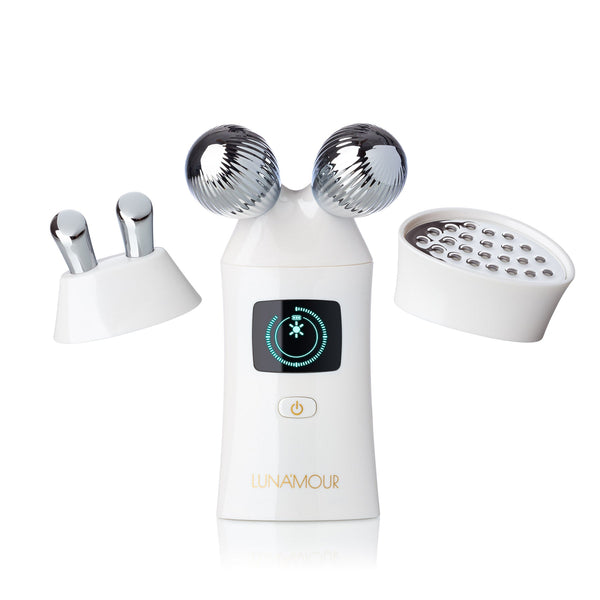
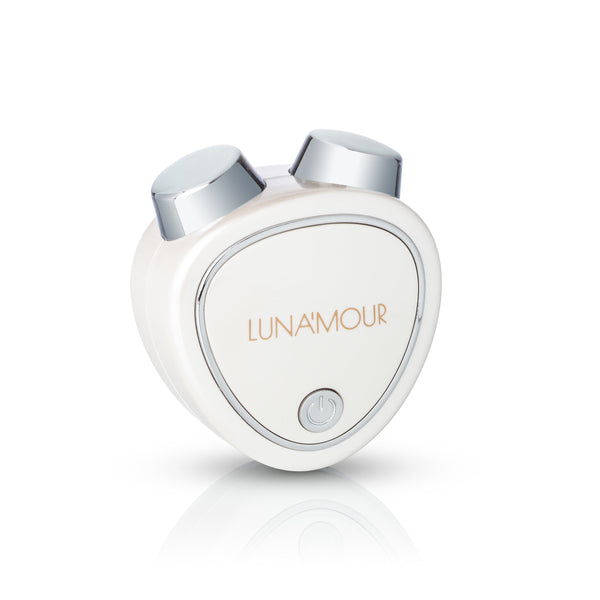
MicroMini is a compact microcurrent tool with sonic vibration, easy to keep by the sink for quick, regular sessions. TriWave Contour Wand brings together microcurrent, galvanic, LED, sonic and heat in one wand for a fuller routine. ElectraLume 3-in-1 pairs microcurrent with light therapy if you want both in a single device.


So, is microcurrent worth it?
It depends on what you want. Microcurrent is likely to suit you if you enjoy a hands-on ritual, want a subtle, natural-looking lift that builds over time, and are happy to make it a regular habit.
It is probably not for you if you want dramatic, permanent change, or if a device is likely to end up forgotten in a drawer.
If you have read that microcurrent can make wrinkles worse, we did not find published evidence for that in the studies we reviewed. Our upcoming guide, Can Microcurrent Make Wrinkles Worse? Myths vs Facts, looks at that claim in detail.
Not sure where to start?
Answer a few quick questions about your skin goals and routine, and we will match you with the technology and device that fit.
Find Your MatchFrequently asked questions
Does microcurrent really work?
Microcurrent may help your face look more lifted and toned, especially right after a session. A randomized trial of facial muscle stimulation found thicker cheek muscles after 12 weeks of regular use, but research on at-home microcurrent is small and short-term, so results are subtle and vary from person to person.
How long does it take to see microcurrent results?
Many people notice a fresher, more lifted look right after a session, but that effect is temporary. More lasting changes are gradual and usually take a few weeks of consistent use, following the routine for your device.
How long do microcurrent results last?
The lifted look after a single session is temporary. Changes built over weeks of regular use are expected to fade gradually if you stop, much like muscle tone when you stop training, so most people continue with maintenance sessions.
Is microcurrent worth it?
It can be if you enjoy a regular ritual and want a subtle, natural-looking lift that builds over time. It is not a good fit if you want dramatic or permanent change, or if you are unlikely to use a device consistently.
Is microcurrent safe?
Clinical studies have reported few side effects, mainly temporary redness and swelling. Do not use microcurrent if you have a pacemaker or another implanted electronic device, check with your doctor if you are pregnant, avoid broken or irritated skin, and follow your device instructions.
Do I need gel for microcurrent?
Yes. Microcurrent needs a water-based conductive gel or serum so the current can travel evenly across your skin. Never use a microcurrent device on dry skin.
Can microcurrent make wrinkles worse?
We did not find published evidence that microcurrent makes wrinkles worse in the studies we reviewed. Use it as directed, with gel and gentle, upward movements, and stop if your skin feels irritated.
References
- Cheng N, Van Hoof H, Bockx E, et al. The effects of electric currents on ATP generation, protein synthesis, and membrane transport of rat skin. Clinical Orthopaedics and Related Research. 1982. PubMed
- Kavanagh S, Newell J, Hennessy M, Sadick N. Use of a neuromuscular electrical stimulation device for facial muscle toning: a randomized, controlled trial. Journal of Cosmetic Dermatology. 2012. PubMed
- Abe T, Loenneke JP. The influence of facial muscle training on the facial soft tissue profile: a brief review. Cosmetics. 2019. Journal
- Wanitphakdeedecha R, Apinuntham C, Yan C, et al. Efficacy and safety of a home-use combination of radiofrequency, light-emitting diode, and microcurrent device for skin rejuvenation: a split-face study. Thai Journal of Dermatology. 2022. Journal
- Bu P, Duan R, Luo J, et al. Development of home beauty devices for facial rejuvenation: establishment of efficacy evaluation system. Clinical, Cosmetic and Investigational Dermatology. 2024. PMC
- Kadam P, Lipner SR. Adverse events associated with at-home microcurrent facial devices. Cutis. 2026. Journal
LUNA'MOUR devices are not medical devices and are not intended to diagnose, treat, cure, or prevent any disease. Individual results vary with skin type and consistency of use.