
LED and Microcurrent in One Routine: The Right Order and Timing
Yes, you can use LED and microcurrent together in one routine. A common approach is microcurrent first on clean skin with conductive gel, then remove the gel and finish with LED on clean, bare skin. Always follow your device manual, since combination devices may have their own built-in sequence.
In this guide
Key takeaways
- LED uses light and microcurrent uses a very gentle current, so they work in different, complementary ways.
- A common professional order is microcurrent first, then LED: gel on for the current, gel off for the light.
- Microcurrent is a morning favorite; LED fits a relaxing evening. Both work at either time.
- All-in-one devices put both in one tool. Follow the mode order your device is designed for.
- Skip microcurrent with a pacemaker or implanted electronics; check with your doctor about light if you take photosensitizing medication or have epilepsy.
If you own an LED device and a microcurrent tool, you have probably wondered whether you can use them back to back, and which comes first. Search for an answer and you will find plenty of "LED vs microcurrent" comparisons, but very little on using LED and microcurrent together, even though professional facials often include both.
This guide covers why the two complement each other, the order many professionals use, how to time it, and a simple routine you can follow at home. If either technology is new to you, start with our pillar guide, The 12 Beauty Technologies Explained.
Why LED and microcurrent pair well
The simplest reason to combine them is that they do not do the same job, so one routine can cover more ground.
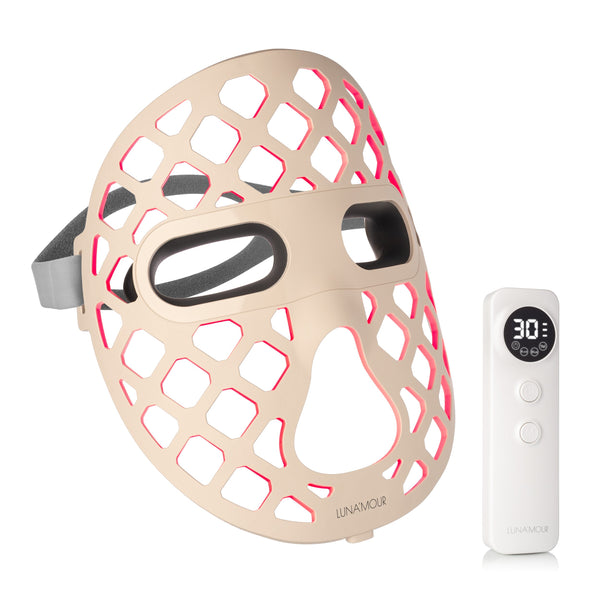
LED works with light
LED (light-emitting diode) therapy shines specific wavelengths of visible light, and in some devices near-infrared light, onto the skin. Researchers call this process photobiomodulation. A 2024 review in the International Journal of Molecular Sciences describes it as a non-thermal process in which light is absorbed by molecules in skin cells, including an enzyme in the mitochondria called cytochrome c oxidase, which then sets off signaling inside the cell 1. An earlier review in Seminars in Cutaneous Medicine and Surgery covers how red and near-infrared light interact with skin 2, and a controlled trial in Photomedicine and Laser Surgery found that people treated with red and near-infrared light reported improvements in the look of fine lines and skin roughness 3. For a deeper look at the colors, read The Science of LED Light Therapy.
Microcurrent works with gentle current
Microcurrent sends a very low-level electrical current, measured in millionths of an amp, through the skin to the muscles beneath. Most people barely feel it. It is used on the face to support a lifted, toned look that many people notice after a session and that builds with regular use. Microcurrent is a close cousin of EMS, which uses a stronger current you can see working; our guide Microcurrent vs EMS explains the difference.
The research on facial electrical stimulation is younger than the research on light. A randomized controlled trial in the Journal of Cosmetic Dermatology tested a facial electrical muscle stimulation device and linked a course of use with greater thickness in a cheek muscle on ultrasound, plus participants rating their facial appearance more positively 4. A 2024 review of home facial devices using radiofrequency, LED and microcurrent concluded they may improve signs of facial aging to a degree, while noting that many studies were small or short 5. We have not found published studies on using LED and microcurrent in the same session, so the case for pairing them rests on how differently they work, not on a combination trial.
Together: surface glow meets lifted contours
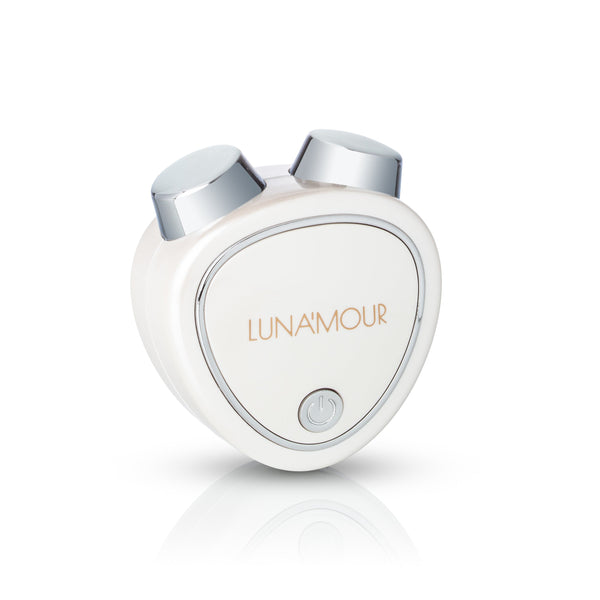
LED is about radiance, even-looking tone and the look of fine lines; microcurrent is about a lifted, toned look. Neither steps on the other's toes, which is why LUNA'MOUR builds both technologies into single devices rather than asking you to juggle two.
LED vs microcurrent side by side
Use this table to see how the two differ in practice. The differences in the bottom rows, especially skin prep, are what decide the order.
| LED light therapy | Microcurrent | |
|---|---|---|
| How it works | Specific wavelengths of light absorbed by skin cells | Very low-level electrical current that works the facial muscles |
| What you feel | Nothing, or a gentle warmth from the device | Little to nothing; sometimes a light tingle |
| May help with | Radiance, even-looking tone, the look of fine lines | A lifted, toned, more defined look |
| When you see it | Gradually, over weeks of consistent sessions | Often a lifted look after a session, building with regular use |
| Skin prep | Clean, dry, bare skin | Clean skin plus a layer of water-based conductive gel |
| Hands-on? | Mostly hands-free (masks) or a slow glide (wands) | Active: you glide the device in set directions |
| Key caution | Photosensitizing medication, epilepsy | Pacemakers and implanted electronics |
Benefits describe appearance. Individual results vary with consistent use.
The right order, and why
There is no single official rule, and your device manual always wins. That said, a common approach among professionals is microcurrent first, then LED. Here is the reasoning.
1. Microcurrent needs gel; LED prefers bare skin. Microcurrent depends on a conductive medium, usually a water-based gel, so the current can travel evenly and the device can glide. LED instructions, by contrast, usually call for clean, dry skin, and a thick layer of gel can sit between the light and your skin. Doing microcurrent first means you apply the gel once, use it, remove it and move on.
2. LED makes a calm finish. Microcurrent is the hands-on part. LED, especially with a mask, is a natural point to sit back before serum and moisturizer.
3. It keeps skincare in the right place. Most leave-on serums, oils and actives belong after both devices, since oils can interfere with conductivity. Our guide Serum Before or After Your Beauty Device? walks through this device by device.
Building the routine from two separate tools? Use the microcurrent tool with gel first, rinse, then switch to the light.
Find it in

Your step-by-step LED and microcurrent routine
Here is the full routine using the common microcurrent-then-LED order. It works with two separate devices or with one combination device. Follow the session time and settings for your own device at every step.
- Prep
Cleanse
Remove makeup, sunscreen and oils so the gel and the light both reach clean skin. Pat dry.
- Prep
Apply conductive gel
Smooth on an even, generous layer of water-based conductive gel over the area you plan to work on. Do not let it dry out mid-session.
- Current
Microcurrent
Glide the device in the directions your manual shows, usually upward and outward, one area at a time. Add gel if it starts to drag.
- Reset
Remove the gel
Rinse with lukewarm water or wipe with a soft, damp cloth, then pat skin dry so the light reaches bare skin.
- Light
LED
Use your LED mask or wand on clean, dry skin for the session time set by your device. Follow its guidance on eye protection.
- Finish
Serum and moisturizer
Apply your serum and moisturizer. In the morning, finish with sunscreen as the final step.
A common approach, not a rule. If your device manual gives a different order, follow the manual.
Morning or night: timing your routine
Both technologies work at any time of day, so the best time is the one you will stick with. Consistency matters more than the clock, the idea behind Why Consistency Beats Intensity.
Morning
Microcurrent is a popular morning step because you get to enjoy the lifted look all day, which makes it a favorite before photos, events or video calls.
Evening
LED suits the evening: passive, calming and easy to fit into wind-down time. Many people run the full routine at night, when there is no rush.
Split routine
You do not have to do both in one sitting. Microcurrent in the morning and LED at night keeps each session short.
| Routine style | Morning | Evening | Good for |
|---|---|---|---|
| All in the evening | Cleanse, moisturizer, sunscreen | Cleanse, gel, microcurrent, remove gel, LED, serum | Unhurried routines and wind-down time |
| All in the morning | Cleanse, gel, microcurrent, remove gel, LED, serum, sunscreen | Your usual skincare | A lifted look for the day ahead |
| Split routine | Cleanse, gel, microcurrent, remove gel, serum, sunscreen | Cleanse, LED, serum, moisturizer | Busy schedules and shorter sessions |
| All-in-one device | Any time: follow the mode order built into your device | The simplest routine | |
How often to use each device depends on the device. Follow the frequency and session time in your manual.
How all-in-one devices simplify it
The routine above assumes two devices. A combination device brings both technologies into one head: one tool to charge, one manual to learn, no switching between tools, which makes consistency much easier. Each has its own modes and sequence, so the manual is your guide to order and timing.
- ElectraLume 3-in-1 pairs microcurrent with light therapy in a facial device, the most direct way to bring both into one step.
- NeckLite brings microcurrent together with three LED colors and gentle heat, designed for the neck, an area many routines skip.
- TriWave Contour Wand combines microcurrent and LED with galvanic, sonic and heat, so one wand covers lift, glow and serum time.
Prefer a dedicated tool for the eye area? EyeYouth Revival pairs EMS and microcurrent with red light for the under-eye area.
Find it in Shop LED light therapy →


Mistakes to avoid
- Using microcurrent on dry skin. Without enough gel the device drags and the current cannot travel evenly. Top the gel up as you go.
- Swapping gel for oil. Face oils are not conductive gels. Our guide to conductive gel alternatives publishes Monday, November 2.
- Leaving gel on under the light. Remove it and pat dry before your LED session.
- Applying serums and actives first. Save leave-on skincare for after both devices unless your manual says otherwise.
- Doing more to see results faster. Longer or extra sessions are not better. Follow your device's session time and frequency.
- Expecting overnight change from LED. LED results usually take weeks of steady use, so judge the routine after a month or more.
Safety first: who should check with a doctor
LED and microcurrent are gentle, but they are not right for everyone. Check with your doctor before starting if any of these apply to you:
- You have a pacemaker or another implanted electronic device: do not use microcurrent.
- You are pregnant or breastfeeding.
- You take medication that makes your skin sensitive to light (relevant for LED).
- You have epilepsy or a history of light-triggered seizures (relevant for LED).
- You have broken, irritated or sunburned skin, an active skin condition or a recent procedure in the area.
Always read your device manual, patch test new gels and serums, start on the lowest setting, and stop if you notice discomfort or irritation.
Not sure where to start?
Answer a few quick questions about your skin goals and routine, and we will match you with the technology and device that fit.
Find Your MatchFrequently asked questions
Can you use LED and microcurrent together?
Yes. LED works with light and microcurrent works with a very gentle electrical current, so they support skin in different ways and can share one routine. Many devices, including LUNA'MOUR combination devices, build both into a single tool. Follow your device manual for order and timing.
Should I use microcurrent before or after red light?
A common approach is microcurrent first, then red light. Microcurrent needs a conductive gel, while LED is usually used on clean, bare skin, so you use the gel, remove it, then finish with light. If your device manual gives a different order, follow the manual.
Do I need to remove conductive gel before LED?
In most routines, yes. A thick layer of gel can sit between the light and your skin, so rinse or wipe it off and pat your skin dry before your LED session, unless your device is designed to be used with gel on.
Is it better to use LED and microcurrent in the morning or at night?
Both work at either time. Microcurrent is popular in the morning for a lifted look during the day, and LED fits easily into a relaxing evening routine. You can also split them: microcurrent in the morning and LED at night.
How often can I use LED and microcurrent?
It depends on your devices. Follow the session time and frequency in each manual, and remember that consistent sessions over weeks matter more than long or extra sessions.
Can I use serum with LED and microcurrent?
Yes, but timing matters. Use a water-based conductive gel during microcurrent, and save leave-on serums, oils and actives for after both devices unless your manual says otherwise.
Who should not use LED and microcurrent?
Do not use microcurrent if you have a pacemaker or another implanted electronic device. Check with your doctor first if you are pregnant, take medication that makes skin sensitive to light, have epilepsy, or have broken or irritated skin in the area.
References
- Hernández-Bule ML, Naharro-Rodríguez J, Bacci S, Fernández-Guarino M. Unlocking the power of light on the skin: a comprehensive review on photobiomodulation. International Journal of Molecular Sciences. 2024. PMC
- Avci P, et al. Low-level laser (light) therapy (LLLT) in skin: stimulating, healing, restoring. Seminars in Cutaneous Medicine and Surgery. 2013. PubMed
- Wunsch A, Matuschka K. A controlled trial to determine the efficacy of red and near-infrared light treatment in patient satisfaction, reduction of fine lines, wrinkles, skin roughness, and intradermal collagen density increase. Photomedicine and Laser Surgery. 2014. PubMed
- Kavanagh S, Newell J, Hennessy M, Sadick N. Use of a neuromuscular electrical stimulation device for facial muscle toning: a randomized, controlled trial. Journal of Cosmetic Dermatology. 2012. DOI
- Bu P, Duan R, Luo J, Yang T, Liu N, Wen C. Development of home beauty devices for facial rejuvenation: establishment of efficacy evaluation system. Clinical, Cosmetic and Investigational Dermatology. 2024. PMC
LUNA'MOUR devices are not medical devices and are not intended to diagnose, treat, cure, or prevent any disease. Individual results vary with skin type and consistency of use.