
Microcurrent vs EMS: What Each One Does and Which You Need
Microcurrent uses a very low current, measured in microamps, that most people barely feel; it works the facial muscles gently for a lifted, more defined look. EMS (electrical muscle stimulation) uses a stronger current that makes muscles visibly contract, like a mini workout, and is used on the face, around the eyes and on the body. Choose microcurrent for subtle sculpting and EMS when you want to feel the muscle working.
In this guide
Key takeaways
- Both are current technologies. The difference is strength: microcurrent works below a visible muscle contraction, EMS above it.
- Microcurrent feels like a faint tingle or nothing at all. EMS feels like a rhythmic pulse or twitch.
- Microcurrent suits precise facial sculpting along the brows, cheekbones and jaw. EMS suits a toned feel on the face, around the eyes and on the body.
- Research on at-home facial devices is encouraging but still small, so expect gradual results that build with consistent use.
- Many devices combine both, so you may not have to choose. The Find Your Match quiz can point you to the right one in two minutes.
Microcurrent and EMS are two of the most searched terms in at-home beauty tech, and two of the most confused. Both promise a more lifted, sculpted look, and some devices offer both. So does it matter which one you pick?
It does. They feel different, work at different intensities and fit different routines. This guide puts them side by side, covers what the research shows and maps your goal to the device that fits. If you are new to beauty tech in general, start with our pillar guide, The 12 Beauty Technologies Explained, then come back here.
What is microcurrent?
Microcurrent
Microcurrent devices send a very low-level electrical current through the skin between two contact points, usually rounded metal tips or prongs. The "micro" refers to microamps: millionths of an amp. At that level the current stays below the point where a muscle visibly contracts, so most people feel a faint tingle or nothing at all.
You glide the device upward and outward along the jawline, cheekbones and brows, encouraging the facial muscles toward a more lifted-looking position. Estheticians often offer microcurrent facials right before an event, because many people see a more lifted look after one session. With regular use, that effect builds.
Much of the science conversation around microcurrent traces back to foundational laboratory research from 1982, which looked at how electric currents of different strengths affected cellular energy (ATP), protein synthesis and membrane transport in skin tissue 1. It helped spark interest in microcurrent for skin, and newer research has since looked at how gentle current works with facial muscles. Because that early work was done in a lab rather than with an at-home device, we keep our own claims measured and focused on how your skin looks.
May help with- A lifted look
- More defined-looking cheekbones and jaw
- Lifted-looking brows
- A refreshed, toned appearance


What is EMS?
EMS (electrical muscle stimulation)
EMS stands for electrical muscle stimulation. In research it is often called neuromuscular electrical stimulation, or NMES. It uses a stronger current, measured in milliamps (thousandths of an amp), delivered in pulses that make the muscle contract. You can see and feel it: a rhythmic tightening and release, like a workout without the reps.
Sports and rehabilitation science has studied it for decades, and a widely cited review in the European Journal of Applied Physiology covers how it works 2. Beauty devices bring a gentler, cosmetic version to your routine.
On the face, EMS works larger areas such as the cheeks and jawline, and smaller devices are shaped for the eye area. On the body, belts and pads are used on the abdomen, arms and thighs as part of a toning routine. Because you feel each pulse, EMS gives instant feedback, which many people find motivating.
May help with- A toned, firmer-looking feel
- More defined-looking contours
- Rested-looking eyes
- Body toning routines


Microcurrent vs EMS side by side
Here is the difference between microcurrent and EMS at a glance, using the devices you will actually find when you shop in the US.
| Microcurrent | EMS | |
|---|---|---|
| Current level | Very low, in microamps (millionths of an amp) | Higher, in milliamps (thousandths of an amp) |
| What you feel | A faint tingle or nothing at all | A pulse, twitch or rhythmic tightening |
| What the muscle does | Works below the level of a visible contraction | Visibly contracts, then releases |
| Where it is used | Face and neck, with detail work on brows, cheekbones and jaw | Face, around the eyes and on the body |
| May help with | A lifted, more defined look; lifted-looking brows | A toned feel; firmer-looking contours; body toning routines |
| Conductive gel | Needed: a water-based gel or serum | Often recommended; follow your device |
| Typical devices | Handheld wands with two rounded tips or prongs | Facial wands and pads, eye masks, body belts |
| When you notice it | A lifted look may show after one session and builds with regular use | The contraction is felt right away; a toned look builds with consistent use |
| Best for | Subtle, precise sculpting and pre-event lift | People who like to feel the muscle working |
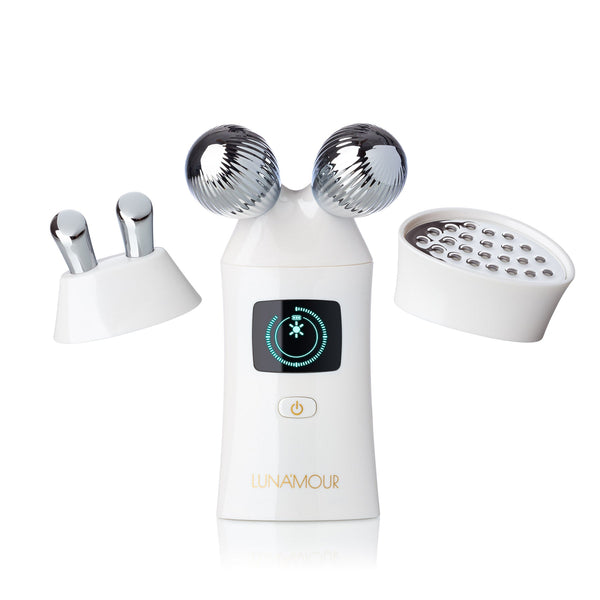
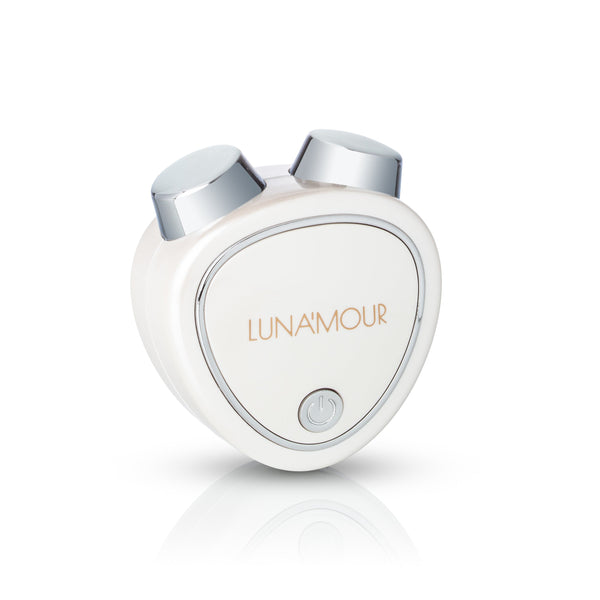
| At LUNA'MOUR | MicroMini, TriWave Contour Wand, ElectraLume, NeckLite | LunaLift, Onyx EyeFix PRO, V-LIFT Ionic, NuFit Pro |
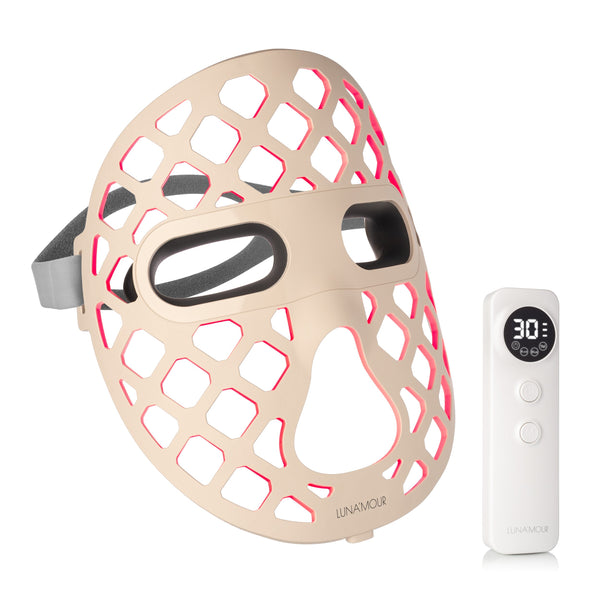
Benefits describe appearance and feel. EyeYouth Revival combines both technologies with red light. Individual results vary with consistent use.
Microcurrent vs EMS: the three differences that matter
Spec sheets make these two look almost identical. In practice, three differences decide which one you will keep using.
1. Strength and sensation
Microcurrent is designed to stay subtle, so a session feels calm, almost like a facial massage. EMS is designed to be felt: each pulse creates a contraction, and on higher settings you will see the muscle move. If you are sensitive or want a relaxing ritual, microcurrent is the easier start. If you like a workout feel, EMS delivers it.
2. Precision vs power
Microcurrent wands use small tips that trace specific lines: the arch of the brow, the cheekbone, the jaw. That makes them ideal for detailed sculpting. EMS works a broader area, contracting a whole muscle group with each pulse, which suits larger zones like the cheeks and, on the body, the abdomen and thighs. Around the eyes, use only EMS tools designed for that area.
3. Face only vs face and body
Microcurrent is almost entirely a face and neck technology. EMS crosses over into belts and pads for the body, so if your goals include body toning, EMS is the one to look for. Keep expectations clear: an EMS belt can support a toned look, but it is not a weight-loss device and is not a substitute for diet or exercise.
What the research says, honestly
The strongest facial study we found is on EMS. In a randomized controlled trial of 108 women published in the Journal of Cosmetic Dermatology, participants who used a facial neuromuscular electrical stimulation device for 12 weeks showed an increase in the thickness of a key cheek muscle, measured by ultrasound, compared with a group that did not use a device. Most participants in the device group also rated their faces as looking firmer, more toned and more lifted 3.
Microcurrent has fewer controlled facial trials of its own. A 2024 review in Clinical, Cosmetic and Investigational Dermatology that looked at home devices for facial rejuvenation concluded that the evidence is still limited, with small studies and short follow-up, and called for better ways to measure results 4. A split-face study of a home device that combined radiofrequency, LED and microcurrent reported improved skin texture over eight weeks, but because the device used three technologies at once, the result cannot be credited to microcurrent alone 5.
What does that mean for you? Both are appearance tools that may help your face look more lifted, toned and defined, with results that build gradually. Consistency matters more than intensity, as we explain in Why Consistency Beats Intensity. For a deeper look at the microcurrent evidence, watch for Does Microcurrent Really Work? What the Research Says, publishing Friday, October 30.
Which one fits your goal?
Start with what you want to see in the mirror. Here is how each goal maps to a technology and a LUNA'MOUR device.
Tired-looking eyes
Eye-specific EMS with red light or warmth.
Try: EyeYouth Revival, Onyx EyeFix PROA body toning routine
EMS belt. Not a weight-loss device and not a substitute for diet or exercise.
Try: NuFit ProStill torn? If you want calm, precise and face-focused, choose microcurrent. If you want to feel it working, or include your body, choose EMS. Want both? Choose a device that combines them. LUNA'MOUR is one of the rare brands to offer all 12 at-home beauty technologies, so you can build a routine around your goal. Browse the full EMS and microcurrent collection.
Not sure where to start?
Answer a few quick questions about your skin goals and routine, and we will match you with the technology and device that fit.
Find Your MatchCan you use microcurrent and EMS together?
Yes. Many people use both: microcurrent for precise sculpting, EMS for a toned feel. Some devices, such as EyeYouth Revival, already combine them, which takes the guesswork out.
With two separate devices, follow each one's instructions for order and session time, and start with one before adding the second. You may also hear that microcurrent can make wrinkles worse; we take on that myth in Can Microcurrent Make Wrinkles Worse? Myths vs Facts, publishing Friday, November 20.
How to use either one well
The basics are the same for both technologies.
- Start with clean skin. Remove makeup, oil and sunscreen.
- Use a conductive layer. A water-based gel or serum is essential for microcurrent and often recommended for facial EMS. Avoid oils, which can block the current.
- Begin on the lowest setting. Increase intensity slowly, and only while it stays comfortable.
- Move with intention. Glide microcurrent upward and outward; use EMS where your device recommends.
- Follow the session time for your device. More is not better.
- Be consistent. A lifted, toned look builds over weeks.
- Clean your device. Wipe the tips or pads after each use and store it dry.
Who should skip both
Skip microcurrent and EMS, or check with your doctor first, if any of these apply:
- You have a pacemaker or another implanted electronic device. Do not use microcurrent, EMS, galvanic or RF devices.
- You are pregnant.
- You have broken, irritated or sunburned skin, or a recent cosmetic procedure in the area.
- Your device also uses light and you take medication that makes your skin sensitive to light, or you have epilepsy.
- Your device also uses RF and you have metal implants in the area.
Always read your device manual, patch test new gels and stop if anything feels painful.
Frequently asked questions
What is the difference between microcurrent and EMS?
Both use gentle electrical current. Microcurrent runs at a very low level, in microamps, that you usually cannot feel. EMS uses a stronger current, in milliamps, that makes the muscle visibly contract. Microcurrent is mainly for the face and neck; EMS is used on the face, eyes and body.
Is microcurrent or EMS better for the face?
Neither is better overall. Microcurrent suits precise, subtle sculpting; EMS suits a toned, worked-out feel. Many facial devices combine both.
Can you feel microcurrent?
Usually not much: a faint tingle or nothing at all. If it feels prickly, add more conductive gel.
Can I use microcurrent and EMS in the same routine?
Yes. They work at different strengths and can complement each other. Follow each device's instructions for order and session time.
Do I need conductive gel for EMS?
Microcurrent always needs a water-based gel or serum. Many facial EMS devices recommend one too, so follow the instructions for your device.
Is EMS safe to use around the eyes?
Only with a device designed for the eye area. Do not use a body EMS device or a standard facial wand around your eyes.
What can an EMS body device do?
Body EMS gives your muscles a workout feel and may help support a toned look as part of a body care routine. It is not a weight-loss device and is not a substitute for diet or exercise.
Who should not use microcurrent or EMS?
Skip both if you have a pacemaker or another implanted electronic device. If you are pregnant, have broken or irritated skin, or have a medical condition in the area, check with your doctor first.
References
- Cheng N, et al. The effects of electric currents on ATP generation, protein synthesis, and membrane transport of rat skin. Clinical Orthopaedics and Related Research. 1982. PubMed
- Maffiuletti NA. Physiological and methodological considerations for the use of neuromuscular electrical stimulation. European Journal of Applied Physiology. 2010. DOI
- Kavanagh S, Newell J, Hennessy M, Sadick N. Use of a neuromuscular electrical stimulation device for facial muscle toning: a randomized, controlled trial. Journal of Cosmetic Dermatology. 2012;11(4):261-266. DOI
- Bu P, Duan R, Luo J, Yang T, Liu N, Wen C. Development of home beauty devices for facial rejuvenation: establishment of efficacy evaluation system. Clinical, Cosmetic and Investigational Dermatology. 2024;17:553-563. PMC
- Wanitphakdeedecha R, Apinuntham C, Yan C, Gulfan C, Wongdama S. Efficacy and safety of a home-use combination of radiofrequency, light-emitting diode, and microcurrent device for skin rejuvenation: a split-face study. Thai Journal of Dermatology. 2022;38(4):121-131. Journal
LUNA'MOUR devices are not medical devices and are not intended to diagnose, treat, cure, or prevent any disease. Individual results vary with skin type and consistency of use.